
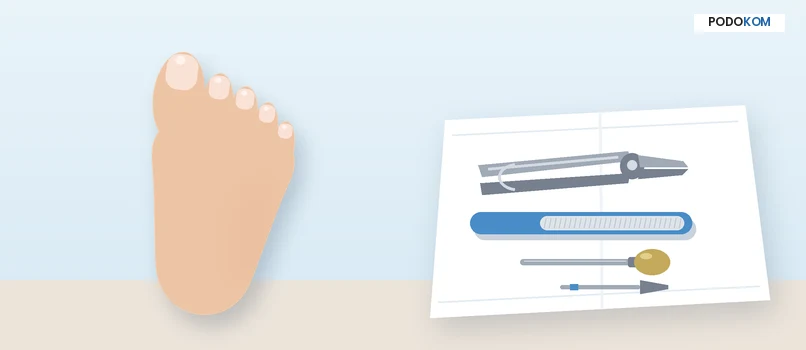
"I have a sore toe, but is that really a reason to see a specialist?" This is one of the most common questions people ask before they book a podiatrist for the first time. Polish speakers usually type it as "podolog czym się zajmuje". Many people have never heard the word "podologist" or "podiatrist" before, and they are not sure whether they need one, a dermatologist, a surgeon or simply a good pedicure. Usually it is a painful nail or a patch of hard skin, and they want to know who to ask.
A podiatrist is a specialist in the health of the feet and toenails. Their everyday work is the skin of the feet and the nail plate: the problems that hurt when you walk, that come back again and again, or that make you hide your feet in summer. Most of a visit is hands-on work on the foot itself.
The problems a podiatrist works with every day
A normal day in a podiatry practice can include:
- Ingrown toenails. The edge of the nail presses into the skin, the nail fold becomes red and painful, and shoes start to hurt. The podiatrist frees the ingrown edge and can fit a correction system, such as a brace or a wire, to guide the nail as it grows.
- Corns and calluses. Hard, thickened skin in places of pressure or friction. These are removed layer by layer, without cutting into healthy skin.
- Cracked heels. Thick skin on the heels that splits and can bleed. The podiatrist removes the hardened layer and advises on care at home.
- Thickened nails. A nail plate that has become thick and hard, often after injury or with age, and presses in the shoe. It can be thinned so it no longer hurts.
- Nail fungus. The podiatrist cleans the changed parts of the nail so that treatment prescribed by a doctor can work better.
- Damaged nails. A nail that has partly come away from the nail bed after an injury, a bruise under the nail, or a nail that has been lost. In some cases a damaged nail can be restored with a prosthesis.
On top of that, many people come simply for a medical pedicure: careful foot care done with sterile instruments by someone trained to notice early changes.
Podiatrist, doctor or beautician?
A podiatrist is not a doctor and does not replace one. A podiatrist does not make medical diagnoses, prescribe medicines or perform surgery. When a problem needs a doctor (a serious infection, a wound that does not heal, a suspected skin or circulation disease), a good podiatrist will tell you so and refer you on. Many practices work together with dermatologists, surgeons, orthopaedists and endocrinologists for exactly this reason.
A podiatrist is also not the same as a beautician. A cosmetic pedicure is mainly about how the feet look. Podiatry is about function and comfort: removing the cause of pain, stopping a problem from coming back, and caring safely for feet that need extra attention. The two overlap in places, but the training and the aim differ.
In practice, a podiatrist takes on the everyday skin and nail problems that home care can no longer handle but that usually do not need a surgeon.
What actually happens during the appointment
If you have never been to a podiatrist, the visit is usually calmer than you might fear. It tends to go like this:
- Questions and a look at your feet. The podiatrist asks what bothers you, how long it has been going on, what you have already tried, and about relevant health conditions such as diabetes. Then they examine the skin, the nails and often your shoes too.
- Finding the cause. A callus or an ingrown nail rarely appears for no reason. Tight shoes, the way you trim your nails, the way you walk or an old injury can all play a role. Removing the problem without understanding the cause usually means it will come back.
- The procedure itself. The podiatrist works with sterile instruments and professional equipment. Most procedures are not painful; if the area is already inflamed, they will tell you what you may feel.
- Advice for home. At the end you usually get practical recommendations: how to trim your nails, which shoes to avoid, how to care for the skin, and whether you need another visit.
It helps to come without fresh nail polish on the toes you want checked, and to bring the shoes you wear most often if pain in shoes is the problem.
Who gains the most from regular visits
Anyone can see a podiatrist. Some people benefit from going regularly:
- People with diabetes. Reduced sensation in the feet means small injuries can go unnoticed. Regular foot care and early checks help keep the feet healthy. The doctor remains in charge of the condition itself.
- Older people. Bending down, seeing well and cutting thick nails all become harder with age. A podiatrist can do safely what has become difficult at home.
- Children and teenagers. Ingrown toenails and nail injuries from sport are common at this age, and early care can prevent a lot of trouble later.
- Anyone whose problem keeps returning. If the same corn or the same ingrown corner keeps coming back, it is worth looking for the reason with someone who sees these problems every day.
You do not have to wait until it hurts badly. A small problem caught early is usually easier to deal with.
A podiatrist in Rzeszów: visiting PODOKOM
The PODOKOM clinic is at ul. Karola Lewakowskiego 4 in Rzeszów. People come to us with the same problems described above: an ingrown toenail, calluses, cracked heels or a thickened nail. If you are not sure where to start, book a podiatry consultation. It costs 100 zł, and the other procedures are listed in our price list. Appointments can be booked through Booksy.
At PODOKOM in Rzeszów, the first consultation works this way: the podiatrist assesses the skin and nails, looks for the cause of the problem and suggests a plan of care. When something needs a doctor, the clinic works with a dermatologist, surgeon, orthopaedist and endocrinologist.