
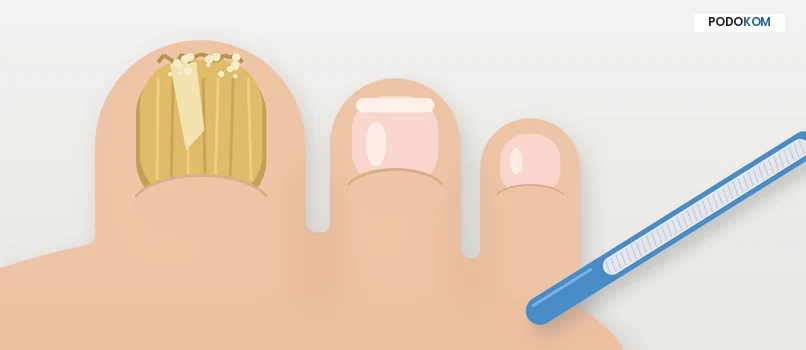
A toenail that turns yellow, thickens and starts to crumble at the edge is often put down to fungus straight away. Often that guess is right: fungal infection of the toenails, which Polish patients search for as grzybica paznokci u nóg, is one of the most common nail problems a podiatrist sees. But several other conditions can make a nail look almost the same, and the care they need is different. So before you buy antifungal varnish for months of use, it helps to know what fungus usually looks like and what else could be behind the change.
How toenail fungus usually starts
Nail fungus usually develops slowly, over months, and at first it is easy to ignore. Typical early signs include:
- a white or yellowish spot or streak, often starting at the free edge or the side of the nail;
- a nail that gradually loses its shine and becomes dull;
- thickening of the nail plate, so that it becomes harder to cut;
- a crumbly, powdery layer under the edge of the nail;
- the nail lifting away from the skin underneath it.
The big toe is affected most often, but the infection can spread to other nails. It is also common for the skin between the toes or on the soles to be affected at the same time, with itching, peeling or small cracks. If you notice athlete's foot and a changing nail together, fungus becomes a more likely explanation.
A fungal nail is usually not painful in the early stage. Pain tends to come later, when the nail is so thick that shoes press on it, or when it starts to grow unevenly.
Conditions that can look like fungus
Plenty of yellow or thick toenails have no infection at all. These are the situations most often mistaken for fungus.
Damage from shoes or an injury
A nail that has been hit, stepped on, or pressed for a long time by tight or hard shoes can thicken, change colour and separate from the nail bed. It is common in people who run a lot or spend the whole day in work shoes. The nail may look very similar to a fungal one, but the cause is mechanical, and treating it as an infection will not help it grow back healthy.
Onycholysis
Onycholysis means that the nail plate separates from the skin under it. The detached part looks white or yellowish, and the space underneath can collect dirt. It can follow an injury, but it can also have other causes. Fungus may later settle in this space, which is one more reason the two are easy to confuse.
Skin conditions and general health
Some skin diseases, such as psoriasis, can change the nails: pitting, discolouration, thickening, or separation. Changes in the nails can also be related to circulation or other health issues. A doctor should look at these; you cannot tell them apart at home just by looking at the nail.
Age
Toenails tend to grow more slowly and become thicker and more brittle with age. A thick nail in an older person is not automatically an infection, although fungus is also more common in later life.
Why it is worth confirming first
Antifungal treatment usually takes a long time, because a toenail grows slowly and the affected part has to be replaced by new, healthy nail. If the problem is not fungus, months of creams and varnishes can pass without any change, and the real cause stays untreated. If it is fungus, knowing that for certain helps the doctor choose what to do.
Fungus can be confirmed by a laboratory test of a sample from the nail. The decision about testing and about medicines belongs to a doctor, usually a dermatologist. A podiatrist can help by assessing the nail, removing the thickened and crumbling layers, and explaining what the changes may mean.
While you wait, avoid these:
- do not cut deep into the nail or dig under it with sharp tools;
- do not cover a changed nail with ordinary nail polish for long periods, as it hides what is happening;
- do not share nail clippers, files or towels with other people in the household.
When a changed toenail needs attention sooner
Most nail changes can wait for a planned visit. See a doctor or a podiatrist soon if:
- you have diabetes or poor circulation in your legs, because even small foot problems can become serious;
- the skin around the nail is red, swollen, warm, or there is pus;
- the nail hurts when you walk or presses painfully in shoes;
- a dark streak or patch appears on the nail without an obvious injury;
- the changes spread quickly to other nails.
At PODOKOM in Rzeszów, a visit for a changed nail begins with an assessment of the foot. We clean fungus-affected nails, thin thickened nail plates, and work alongside the recommendations of a doctor; the clinic cooperates with dermatologists and laboratories. If the nail needs medical diagnosis, we will say so.
If you are unsure, watch the nail for a few weeks and note what changes. A photo every week or two makes the comparison easier. Then decide on treatment with someone who has seen the nail, so you are not acting on a guess.